

A practical look at the late-September garden rhythm in Zone 7b, focusing on small daily tasks, fall crops, and preparing beds for cooler weather
Late September always feels like the quiet turn of the season. The air is warm but the light is different, and the garden starts to shift, almost without you noticing it for awhile. Summer plants are slowing, fall crops are waking up, and the whole space kind of changes it’s rhythm.
Gardeners in Zone 7b face a time in the gardening year right now: warm days, cooler nights, active weeds, and ideal temperatures for fall greens. This post shares what is working for me, what to watch for, and the small tasks that make the biggest difference heading into October. This stretch of the month is about steady upkeep, not big renovations. Small daily passes, light cultivation, and setting up the next phase. That is the work right now. Below are today’s observations, tasks, and lessons as I ease the garden into fall.
Weed Pressure and Seasonal Change
Warm season weeds fading, cool season growth appearing
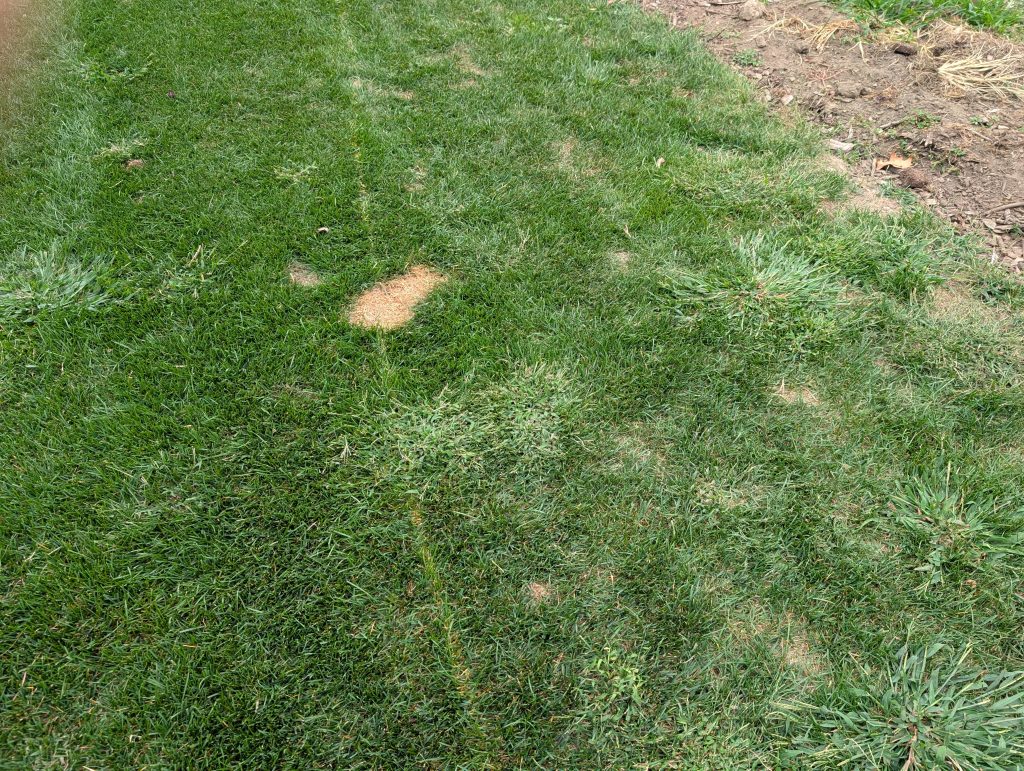
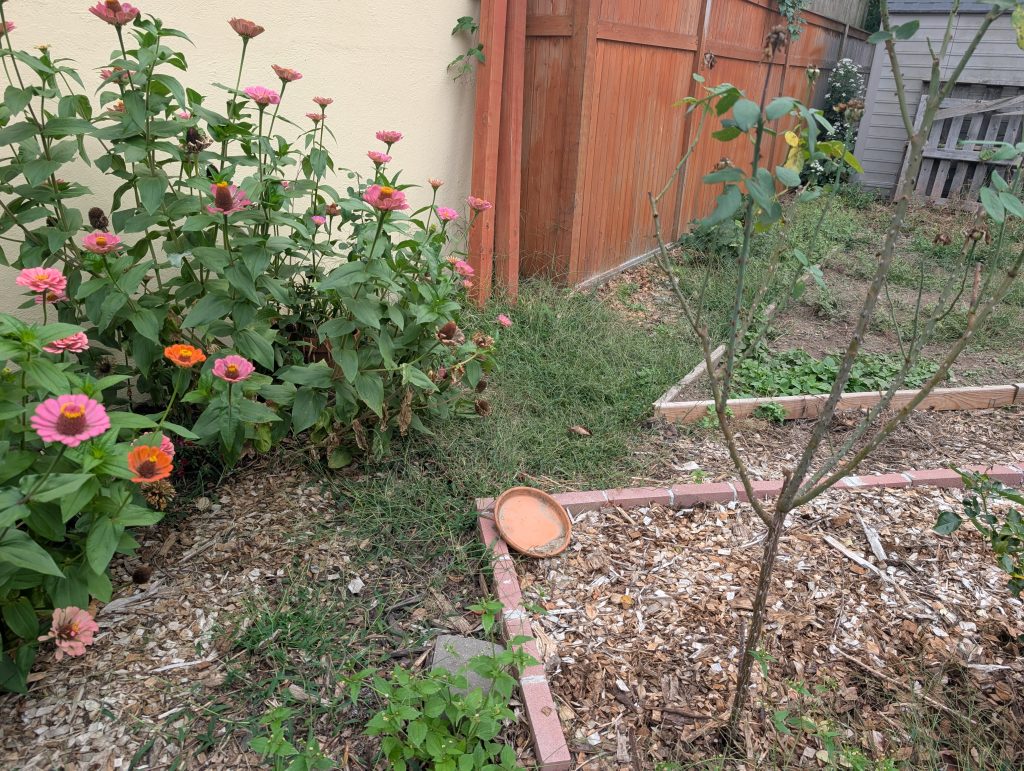
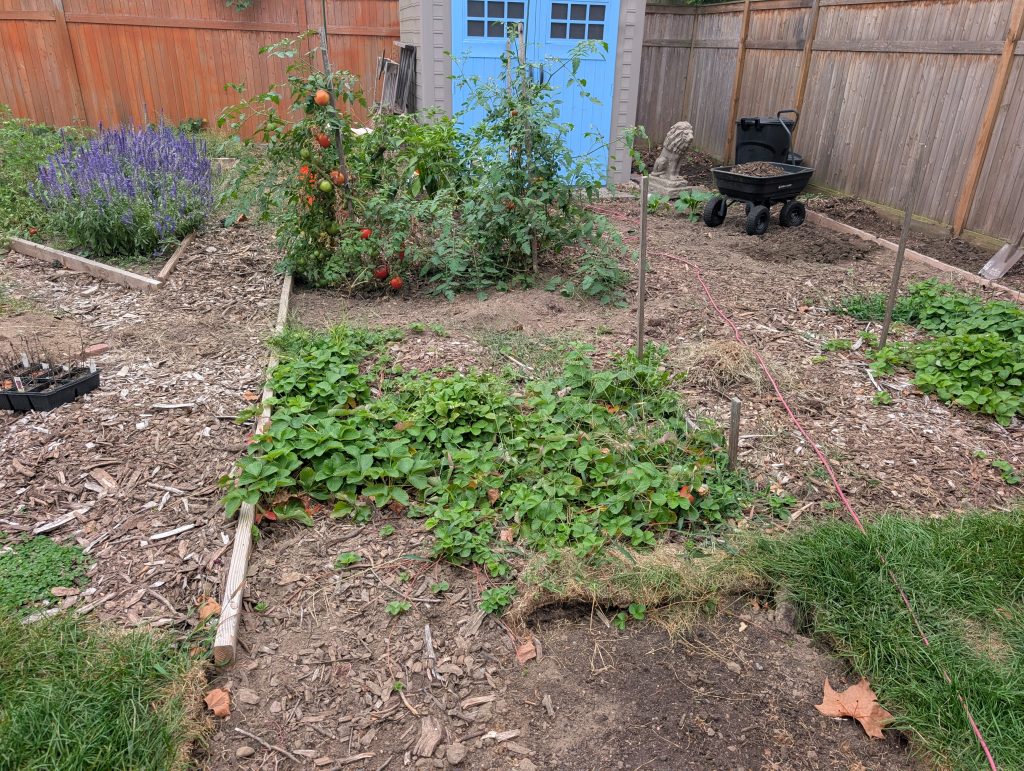
I am starting to see warm season weeds fade. For example, crabgrass in the back lawn is browning at the tips. At the same time, fresh seed heads are showing up in spots where mulch was not thick enough. A few green patches in wood-chip paths really stand out and break the clean rhythm I like, so I made note of the spots that need more mulch.
Today’s tasks
- Pulled large weeds before they dropped seed
- Noted where mulch needs topping up
- Did a shallow surface scrape to stop tiny weeds early
I am thinking more in two categories:
Weeding is removing plants that already rooted.
Cultivating is quick, light passes to keep the soil clean and loose.
My goal is for cultivating to feel like mowing. Small, routine touches instead of big cleanup days.
Lawn Care and Overseeding Lessons
The back lawn (Kentucky bluegrass sod from last fall) is still thick, but a few areas thinned out. I hesitated to overseed because I do not have pure Kentucky bluegrass seed. I do have premium perennial rye and a rye-blue mix, so I may experiment lightly in select spots and watch how the color and texture blend.
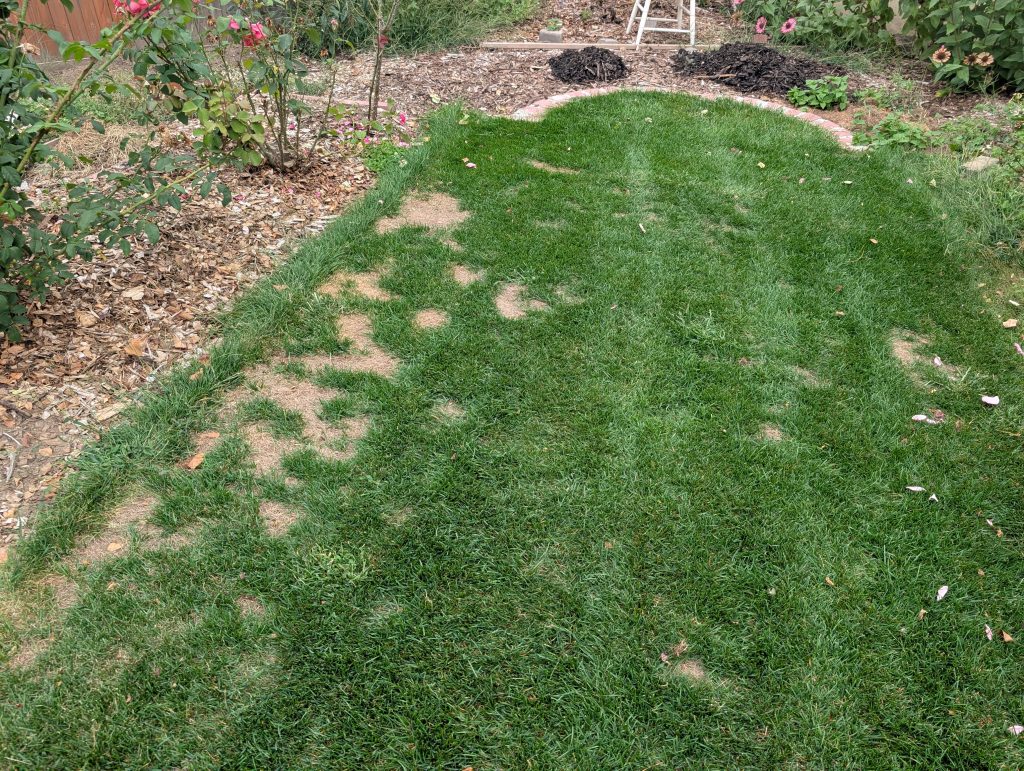
In the front yard, I scalped overgrown grass with a string trimmer, then blew and raked debris. I tried manual aerating and quickly realized it is extremely hard work. That lawn is along a fence and does not get traffic, so there is no real compaction. Aerating was unnecessary effort.
A dethatching pass might make more sense next time. The main lesson, as always, is test a little first. Then adjust.
The lesson is simple. Test a little first. Do not assume every lawn task is needed everywhere.
I am now planning to rent or buy a dethatcher in the future. A machine that lifts old debris and dead grass so new seed can reach soil is a better fit than hand aeration.
After preparing the front lawn, I spread the premium perennial rye seed and used a plastic rake to help it settle into the surface. Then I watered well. Rain is in the forecast, so I expect to see germination soon.
Edible Garden and Flower Beds
Cool season crops are easy right now
Fall greens are doing great. They germinate fast and love the cooler nights. I have:
- Spinach
- Lettuce
- Bok choy
The tomatoes are slowing down but still growing. I plan to prune more next year and grow more plants, rather than letting a few get big and unruly.
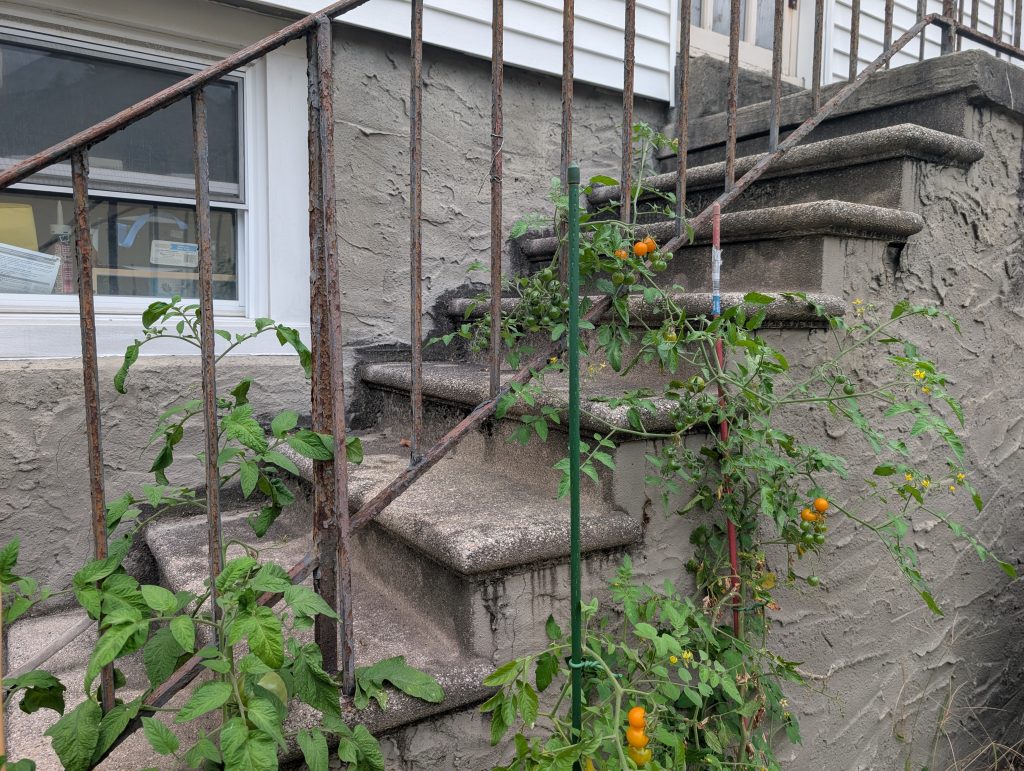
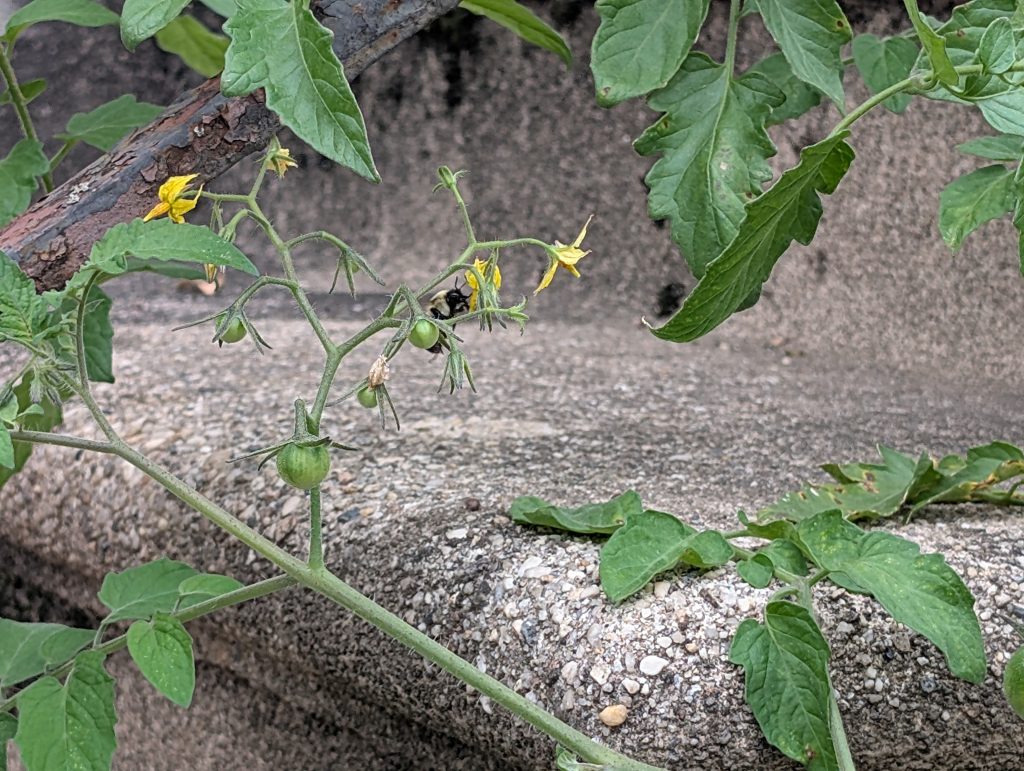
The Brandywine tomatoes still have not ripened. I used the stair railing as a trellis, but next time I will plant even closer to the wall for proper support. When planting near a fence, railing, or wall, put the plant right up against the structure. It makes training much easier.
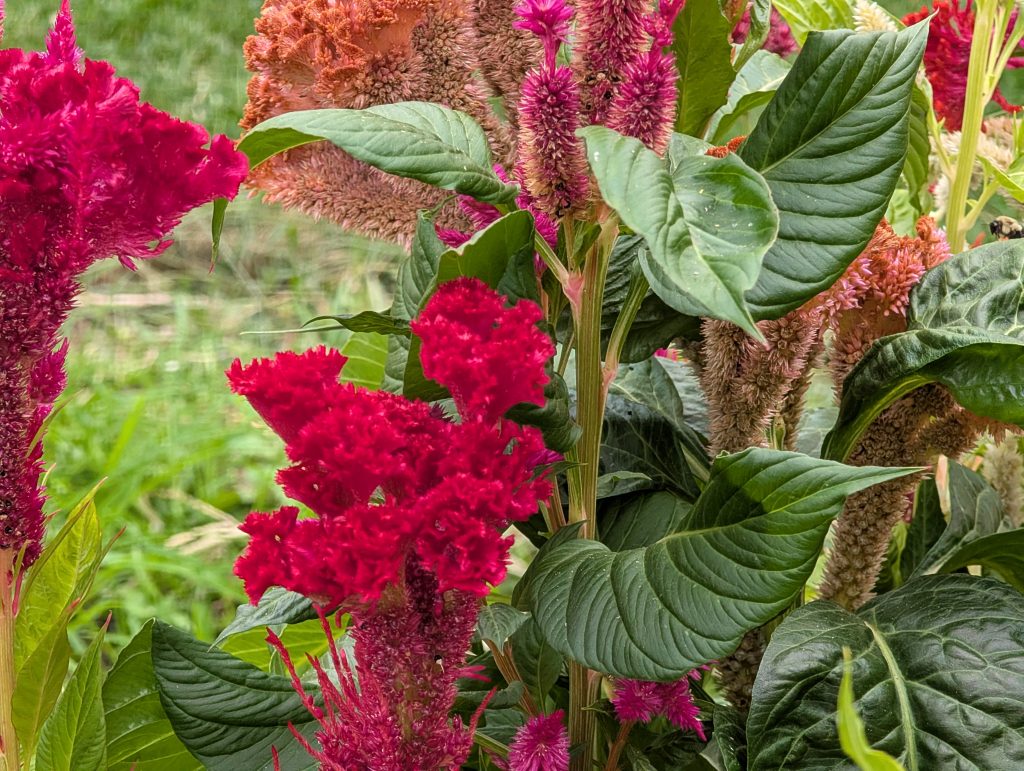
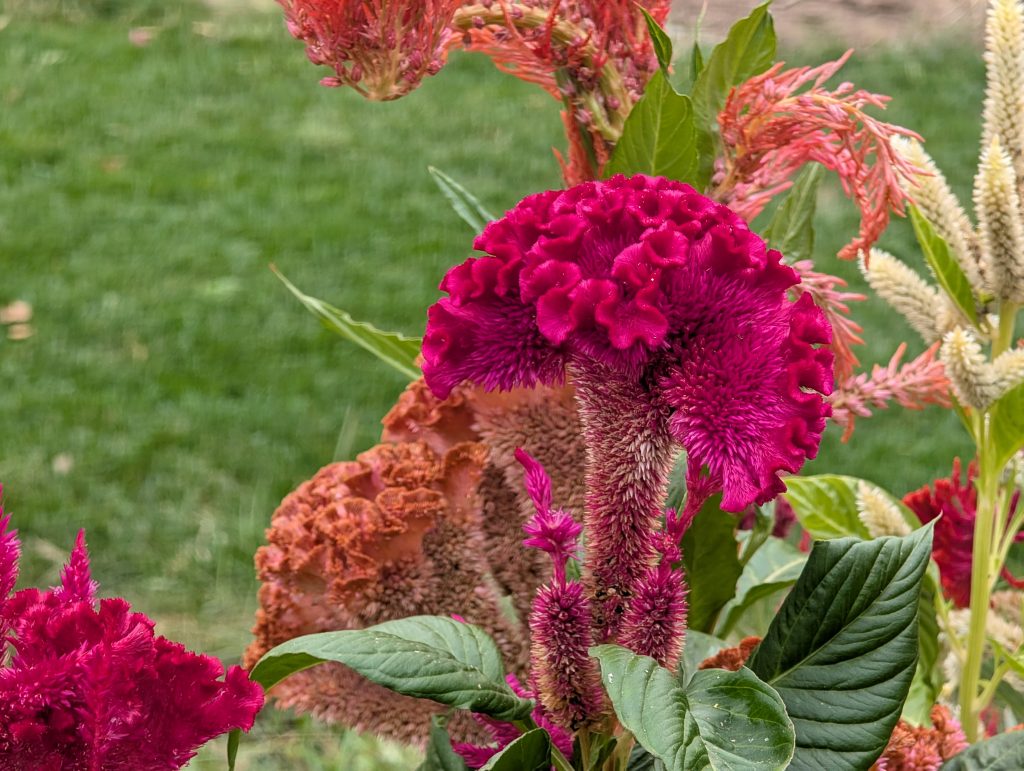
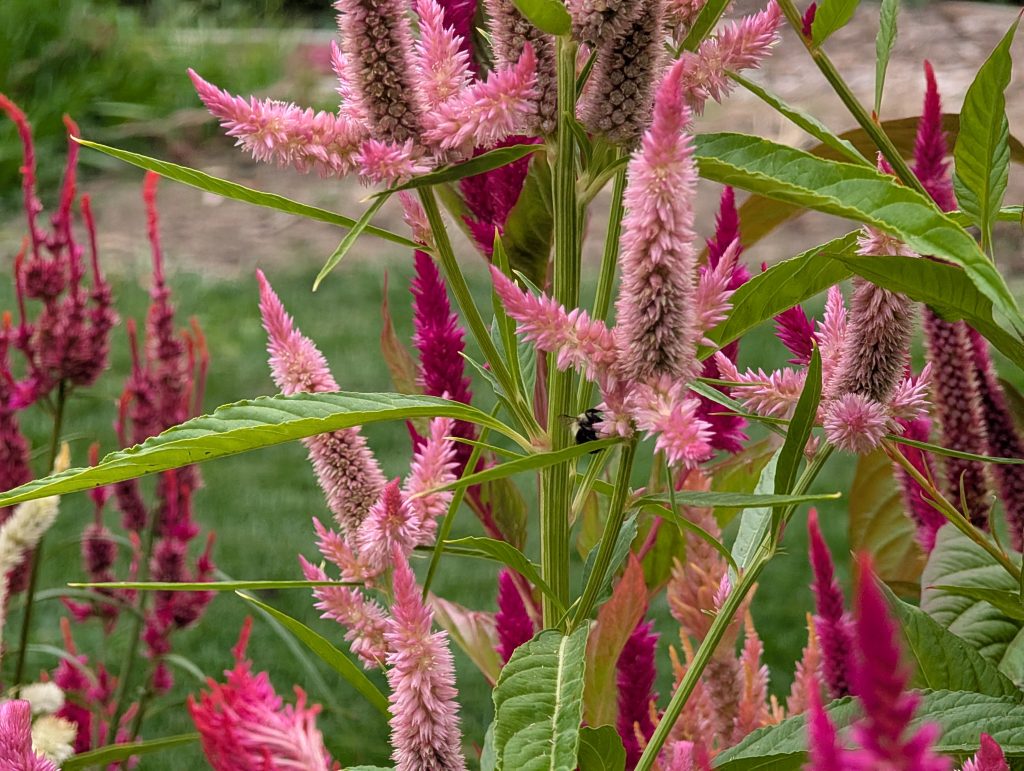
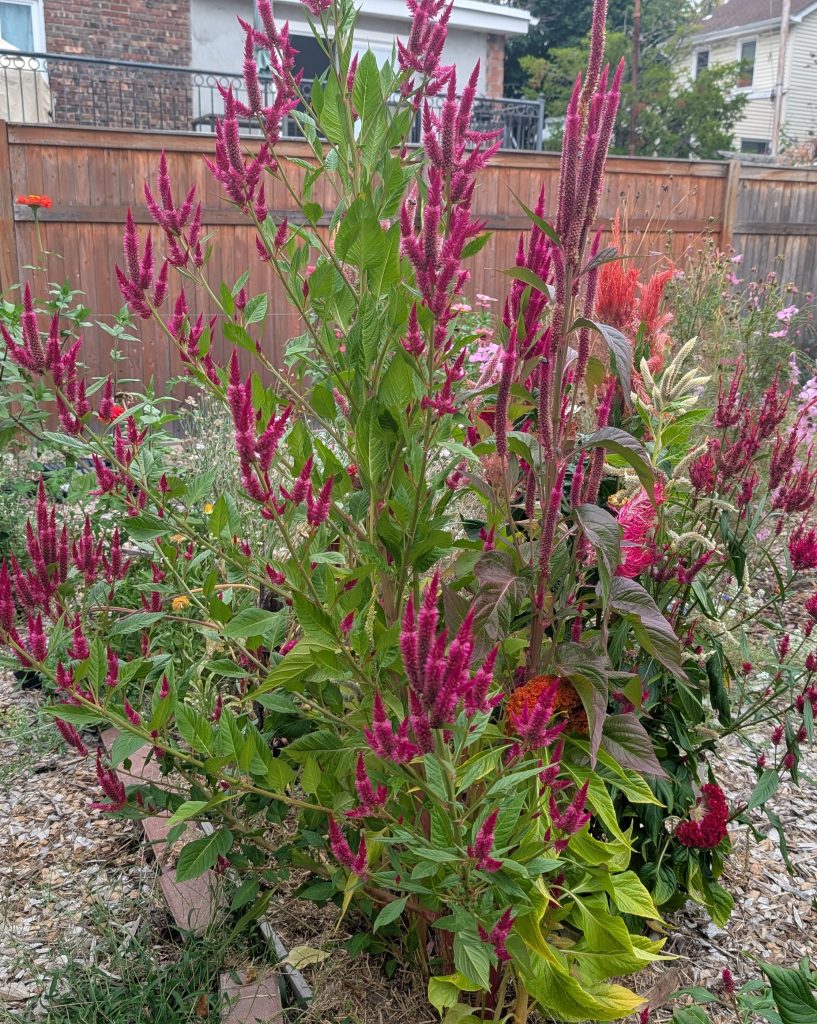
Celosia from seed continues to be a highlight. The shapes are unusual, almost coral-like, and the bees love them.
Insect Activity
Yellowjackets are still very active. Any disturbance of the ground, such as mowing, brings them out almost immediately. Because of this, I am delaying digging up strawberries and gladiolus until they settle down more. Garden tasks are always easier when you work with the season instead of against it.
Going Forward
My plan for the next stretch:
- Continue planting small batches of greens weekly
- Prep beds for garlic
- Add mulch to weak areas in wood-chip paths
- Maintain quick daily soil passes for weed prevention
- Keep newly seeded lawn areas moist for germination
I harvested one pumpkin this year. Next time I will grow a smaller variety to get more fruit, and I may train them vertically to save space.
The main theme this week is consistency. A little each day keeps things manageable, enjoyable, and tidy.
Key Takeaways for Zone 7 Gardeners
- Warm season weeds fade now, but weeds appear where mulch is thin
- Manual aeration is not always necessary, check soil and traffic first
- Fall greens are the easiest crop of the year in this zone
- Yellowjackets can stay active well into fall
- Daily light cultivation is easier than occasional heavy weeding
- Plants grown near walls or rails should be placed very close for support
Overall, the garden is moving into a slower, steadier tempo. Fall rewards short, consistent touches much more than dramatic effort. A bit of hoeing, a bit of seed-starting, a bit of lawn repair and observation goes a long way in this season. I want to carry that rhythm forward. Daily attention, small moves, and letting the garden guide the pace instead of forcing it. Little by little, the whole space stays healthy, productive, and enjoyable without feeling overwhelming.
If you garden in Zone 7 or a similar climate, this is a great time to sow greens, check mulch depth, repair thin lawn patches, and watch for late-season insect activity. Fall gardening success really comes from rhythm, not rush.